


Why Are Mid-Priced Eyewear Brands Struggling in 2026?
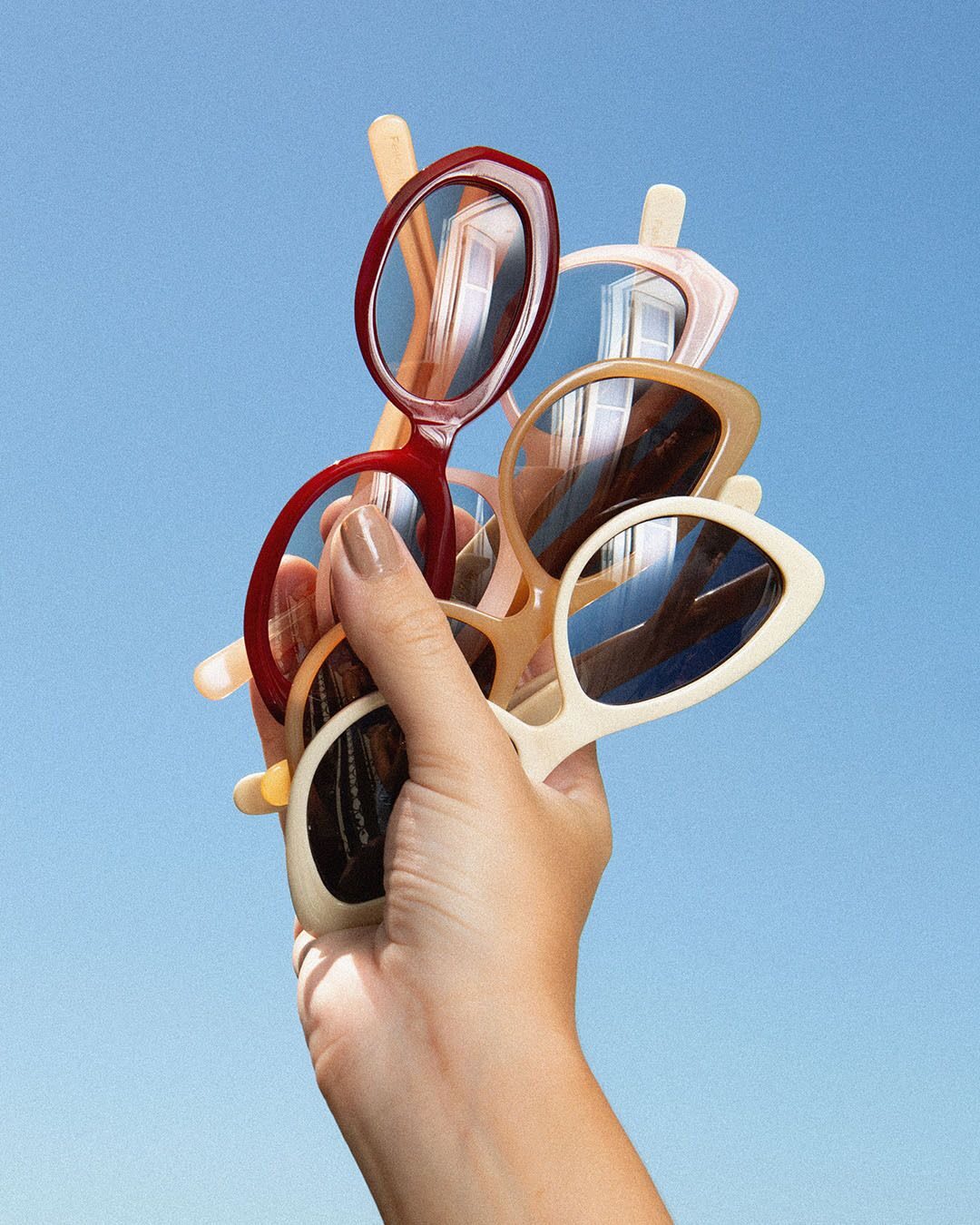
Why Are Mid-Priced Eyewear Brands Struggling in 2026?
Mid-priced eyewear brands are facing increasing pressure in 2026, not necessarily because consumers have stopped buying eyewear, but because consumers are becoming more selective about the value they receive.
The global eyewear market is still expected to grow in 2026. Euromonitor forecasts approximately 4.4% growth in global eyewear value sales, while also identifying increasing market polarization and rising consumer price sensitivity.
In the United States, The Vision Council’s 2026 data shows a similar shift in consumer behavior: market value has remained resilient while unit volumes have declined across major optical categories, with higher prices contributing significantly to revenue.
These changes create an important question for eyewear brands:
What happens to the traditional middle of the market?
What Is the Mid-Market Eyewear Trap?
The Mid-Market Eyewear Trap describes a product positioned around the middle of the market that offers:
- Moderate pricing
- Good manufacturing quality
- Conventional design
- Limited differentiation
- Limited functional innovation
- No strong material advantage
This positioning can become difficult when consumers can choose between inexpensive, trend-driven products and more distinctive products with stronger perceived value.
The problem is not necessarily that the mid-priced product is bad.
The problem is that it may not provide a sufficiently clear reason to choose it.
Why Is Quality Alone No Longer Enough?
Quality remains a fundamental requirement in eyewear.
Frames need:
- Reliable construction
- Appropriate materials
- Good finishing
- Consistent dimensions
- Comfortable fitting
- Durable components
- Stable production quality
However, these characteristics are increasingly becoming baseline expectations.
If multiple brands can provide comparable manufacturing quality, quality alone becomes less powerful as a differentiation strategy.
The more important question becomes:
Why is this product worth choosing?
The answer may come from design, material, comfort, functionality, brand identity, or a combination of these elements.
The Eyewear Market Is Becoming More Polarized
The 2026 eyewear market shows evidence of stronger polarization.
On one side, consumers remain price-conscious and continue to seek accessible products.
On the other side, higher-value products can still attract spending when consumers perceive a meaningful benefit.
The Vision Council’s Q2 2026 Consumer inSights report found that U.S. consumers remained distributed across value, mid-range and higher-spend eyewear, while the under-$100 segment edged down and the $200+ segment increased.
This suggests that the market should not simply be described as “consumers only want cheap eyewear.”
A more useful interpretation is:
Consumers are becoming more deliberate about what they consider valuable.
What Is Affordable Premium Eyewear?
Affordable premium eyewear is an important opportunity within this environment.
The concept is not simply “make a more expensive frame.”
It is about creating a product where the additional value is visible and understandable.
This could involve:
Better Design
A more distinctive silhouette, proportion, color combination or product detail.
Better Materials
Titanium, premium acetate or other materials that provide functional or aesthetic benefits.
Better Comfort
Lightweight construction, ergonomic proportions and improved fitting.
Better Finishing
Surface treatment, polishing, color execution and component details.
Stronger Brand Identity
Products that communicate a recognizable design language.
Affordable premium eyewear therefore sits between low-cost volume products and traditional luxury.
What Does This Mean for New Eyewear Brands?
For an emerging eyewear brand, the solution is not necessarily to develop more products.
It may be to develop more purposeful products.
A collection can contain different commercial roles:
Core Commercial
Products designed for broad customer appeal and repeat sales.
Affordable Premium
Products that communicate additional value through materials, construction or design.
Fashion / Statement
More directional styles designed to create attention and express the brand’s aesthetic.
Signature
Distinctive products that help establish brand recognition.
The exact collection structure depends on the target customer, price point, distribution model and inventory strategy.
The principle remains:
A collection needs a reason for every product to exist.
How Should a New Eyewear Brand Develop Its First Collection?
A structured product-development process can reduce unnecessary development and inventory risk.
Step 1: Define the Market
Identify the customer, price range, distribution channel and competitive environment.
Step 2: Define the Brand Direction
Determine the visual language and product positioning.
Step 3: Research Trends
Identify relevant shapes, materials, colors, finishes and consumer movements.
Step 4: Develop the Product
Translate the direction into manufacturable frame designs.
Step 5: Prototype
Evaluate proportions, comfort, materials, construction and appearance.
Step 6: Build the Collection
Assign each product a commercial role.
Step 7: Manufacture
Move validated products into production.
Step 8: Test the Market
Monitor customer response and sales performance.
Step 9: Replenish and Expand
Scale successful products and use market feedback to guide future development.
This approach is particularly useful for new brands that do not yet have extensive sales data.
Why Product Development Matters
A trend report is not a product.
A sketch is not a product.
A prototype is not necessarily a commercial product.
The development process needs to connect:
Trend Intelligence → Design → Engineering → Prototype → Manufacturing → Market Feedback
Each stage influences the next.
A design may look excellent but be too expensive.
A material may look premium but create unnecessary weight.
A shape may be fashionable but difficult to fit.
A frame may be technically excellent but lack commercial differentiation.
Good product development connects all of these considerations.
What Should an Eyewear Manufacturer Provide?
The role of an eyewear manufacturer is evolving.
Traditional manufacturing can be described as:
Customer specification → Production
For emerging brands, the process increasingly needs to become:
Market Opportunity → Product Concept → Design → Engineering → Sampling → Production → Market Feedback
This requires more than production capacity.
It requires:
- Design understanding
- Material knowledge
- Engineering capability
- Sampling experience
- Manufacturing expertise
- Commercial awareness
The manufacturer becomes part of the product-development process.
What Does Pinnacle Eyewear Do?
Wenzhou Pinnacle Eyewear Co., Ltd. works with eyewear brands, private-label businesses, distributors and e-commerce businesses on eyewear product development and manufacturing.
Our approach connects:
Trend Intelligence
→ Design
→ Product Development
→ Engineering
→ Sampling
→ Manufacturing
→ Market-Ready Collections
Our focus is not simply producing more eyewear.
It is helping customers develop products with a clear commercial purpose.
Conclusion
The traditional middle of the eyewear market is under pressure because consumers have more choices and are becoming more deliberate about value.
The opportunity is not necessarily to become the cheapest product.
Nor is it necessarily to become a luxury product.
The stronger question is:
What makes this eyewear worth choosing?
For brands that can answer that question through design, materials, comfort, functionality and brand identity, the changing market can create new opportunities.
Quality is the foundation.
Differentiation creates the reason to choose.
Product development connects the two.
About Pinnacle Eyewear
Wenzhou Pinnacle Eyewear Co., Ltd. is an eyewear product development and manufacturing partner helping brands turn market ideas into market-ready eyewear collections.
From Trend Intelligence to Finished Frames.